
Webflow Template & Design Studio
Modern Webflow Portfolio Templates for Agencies & Creatives
Explore premium Webflow portfolio and agency website templates designed for speed, SEO, and conversions. Start with a ready-to-use template or let our experts build a custom Webflow website for your business.
Templates
Webflow Portfolio & Agency Website Templates
Hand-crafted, CMS-ready Webflow templates built for portfolios and creative agencies — polished, fast to launch, and easy to customize.
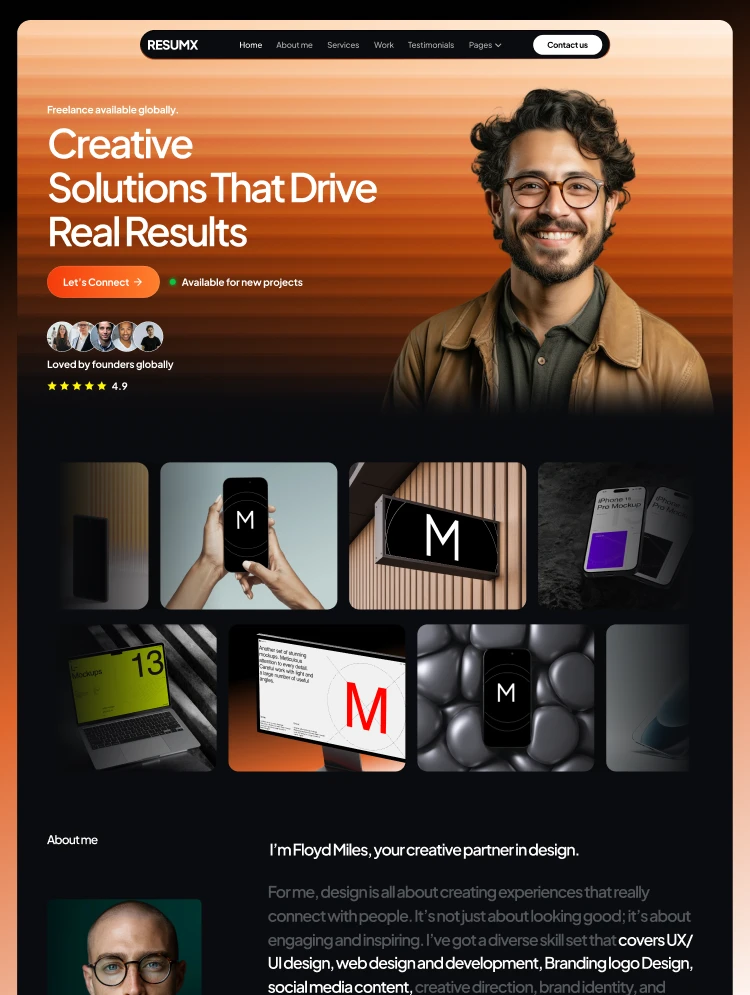
ResumX — Webflow Portfolio Template
A clean, minimal portfolio layout for designers and photographers, with CMS-powered project pages.
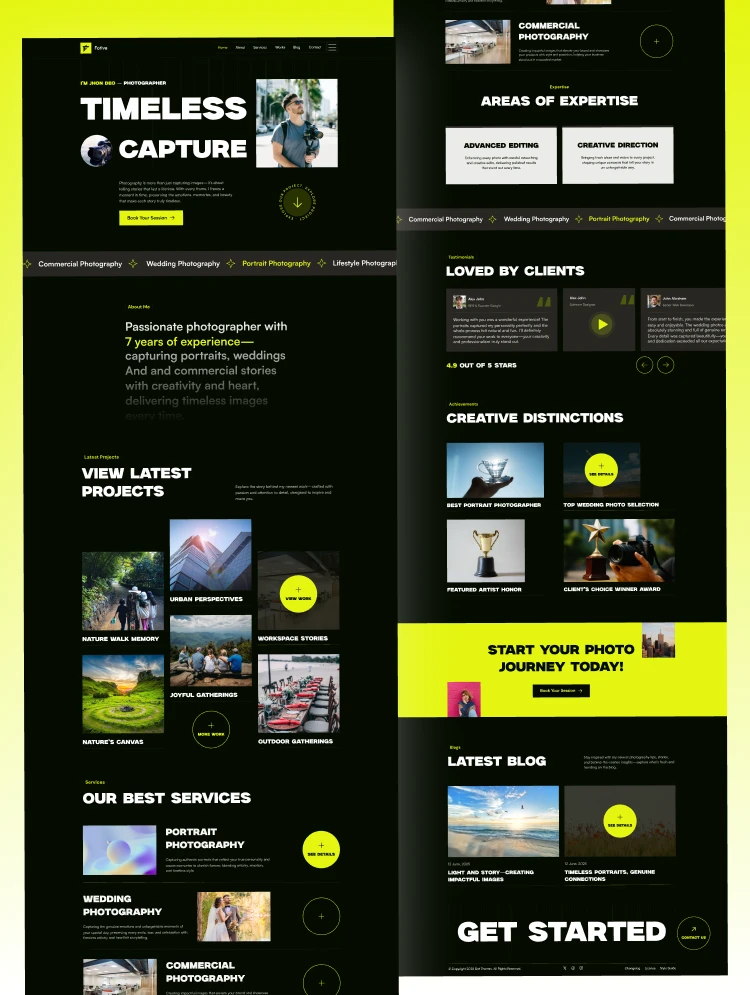
Fotiva — Photography Webflow Template
A conversion-focused landing page for SaaS products, complete with pricing tables and CMS blog.
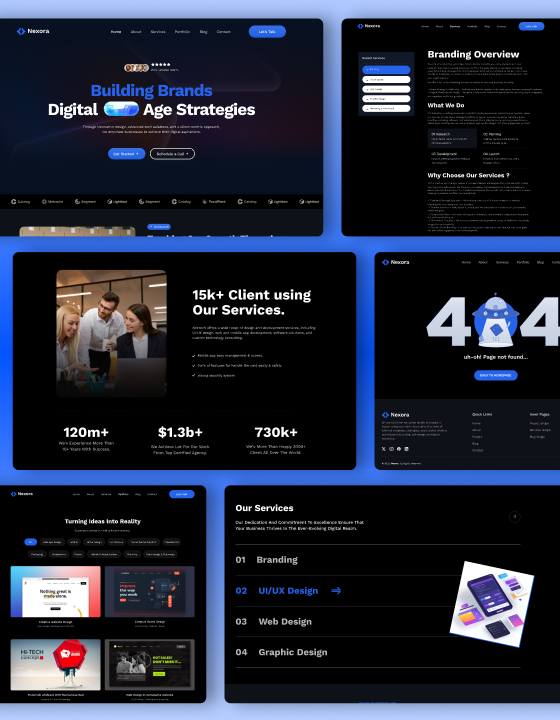
Nexora — Webflow Portfolio Template for Agency
A bold, grid-driven layout built for creative agencies that want their case studies to stand out.
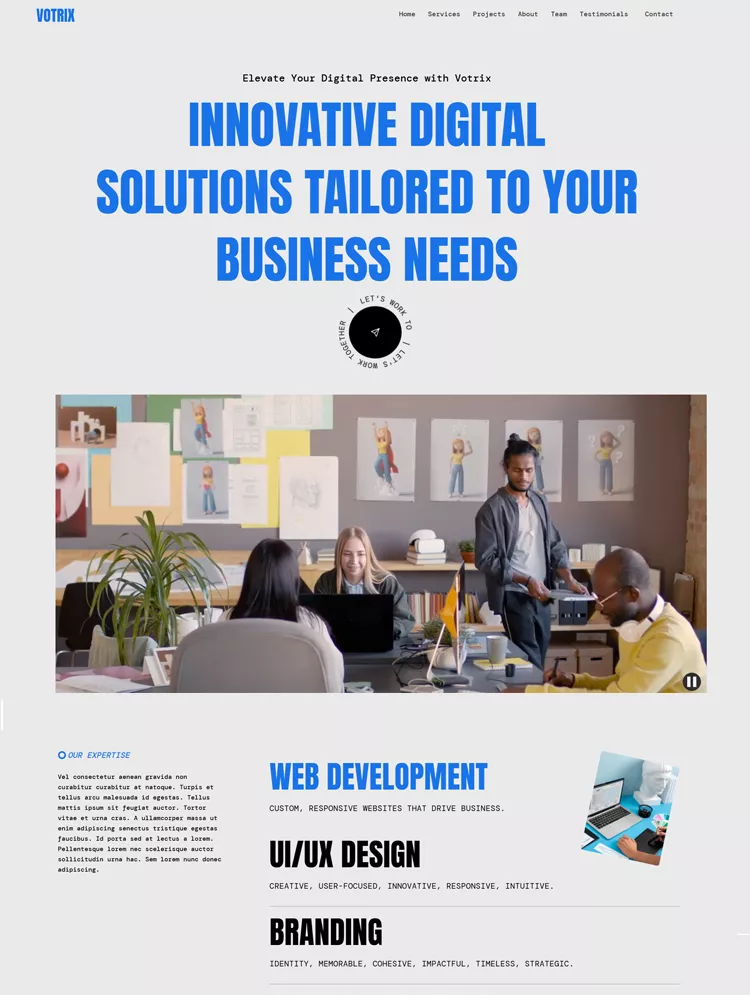
Votrix — Agency Website Template
A calm, editorial-style blog layout with a distraction-free reading experience and CMS collections.
Why DotThemes
Webflow Agency & Portfolio Website Templates
DotThemes builds Webflow agency website templates and Webflow portfolio website templates for studios, freelancers, and creative teams who want a professional site live in days — not months. Every template is designed in Webflow, ships with a CMS, and is built on real client work, not stock layouts.
What Is a Webflow Agency Website Template?
A Webflow agency website template is a pre-built site structure — homepage, services, case studies, team, and contact — made specifically inside Webflow’s visual editor. Instead of starting from a blank canvas, you get a fully designed, CMS-connected site that you can rebrand and launch without writing code.
Who Webflow Portfolio Templates Are For
Our Webflow portfolio website templates are built for designers, photographers, developers, and small studios who need their work to look as good as the work itself. Each project lives in a CMS collection, so adding a new case study takes minutes, not a rebuild.
- Built natively in Webflow — no plugins, no code required
- CMS-powered project and case study pages
- Optimized for Core Web Vitals and fast page speed
- Fully responsive on mobile, tablet, and desktop
- Editable by anyone in the Webflow Designer
- SEO-ready structure with clean headings and metadata
Frequently Asked Questions
Why choose Webflow over WordPress or other CMS platforms?
Most traditional CMS platforms, including WordPress, rely on a stack of third-party plugins to handle basic functionality like forms, SEO, image optimization, and page building. Each plugin adds its own code to your site, and over time that stack slows page load speed, creates conflicts when plugins update at different times, and opens security gaps that need constant patching and maintenance. Webflow takes the opposite approach: design, CMS, hosting, and core functionality are built into one system maintained by Webflow itself, so there’s no plugin stack to manage, no compatibility issues between tools, and no separate hosting or security plugin to configure. For an agency or freelancer, that means less time firefighting a website and more time running the business the website is supposed to support.
How fast can I launch my agency website with a template?
Because the page structure, CMS collections, and design system are already built and tested, most clients go from purchase to a fully branded, live website within a few days rather than the four-to-eight-week timeline a custom build usually takes. The work that remains is content work, not development work: replacing placeholder text and images with your own, setting your brand colors and fonts, connecting your domain, and publishing your first few case studies. If you’re launching under time pressure — a rebrand, a new service line, or simply replacing a site that’s embarrassing you in front of prospects — a template removes the design and build phase entirely and lets you focus only on the content that’s specific to your business.
Will the template help me generate more client leads?
Every template in this collection is structured around a specific goal: moving a visitor from “just browsing” to “book a call” or “request a quote.” That means clear, repeated calls-to-action instead of a single contact link buried in the footer, a services section that explains outcomes rather than just listing offerings, and case study layouts built to show before-and-after results rather than just pretty screenshots. This structure is based on patterns used by agency sites that consistently convert cold traffic into inquiries — the same section order, the same proof-before-ask sequencing, the same friction-reducing contact forms. You’re not just buying a design; you’re buying a layout logic that’s already been tested to do the job a sales page needs to do.
Is Webflow a good fit for startups and small agencies?
Startups and small agencies typically don’t have the budget to keep a developer on retainer just to update a website, but they also can’t afford a site that looks unfinished or breaks when a plugin updates. Webflow is built for exactly that gap: it gives a small team the ability to launch a professional, custom-looking site and then make ongoing changes — new pages, new copy, new case studies — directly inside the visual editor, without writing code or filing a ticket with a developer. As the business grows, the same Webflow site scales with it: you can add new CMS collections, new landing pages, or new integrations without rebuilding the foundation, which is a common problem with sites built on rigid, code-heavy platforms early on.
Are the templates optimized for SEO and page speed?
Yes — each template is built with a clean, semantic heading structure (proper H1, H2, and H3 use rather than styled divs pretending to be headings), descriptive alt text placeholders on images, and metadata fields ready to fill in for every page and CMS item. On the performance side, Webflow serves optimized, compressed assets and clean generated code by default, so pages load fast without the extra scripts and render-blocking resources that plugin-heavy CMS sites tend to accumulate. Fast, crawlable pages are one of the clearest ranking and user-experience signals search engines use, and because there’s no plugin bloat working against you, the template’s SEO foundation stays intact instead of degrading as you add content over time.
Can I add my own case studies and blog posts easily?
Yes — every template includes CMS collections already set up for case studies, projects, or blog posts, so adding a new one is as simple as filling out a structured form inside Webflow: title, cover image, summary, body content, and any custom fields like client name or project category. The new entry automatically appears on your work or blog page using the same design as every other entry, so you never touch layout, spacing, or code to publish something new. This matters for an agency in particular, since publishing a new case study right after finishing a client project — while the results are fresh — is one of the simplest ways to keep a site’s proof of work current without waiting on a developer.
Do I need ongoing developer support to maintain the site?
No — this is one of the biggest practical differences between a Webflow site and a plugin-based CMS site. There’s no plugin stack that needs version updates, no compatibility breakage when your CMS core updates, and no security patching cycle to keep on top of, because Webflow manages hosting, infrastructure, and core platform updates on its end. Day-to-day changes — editing copy, swapping images, publishing a new case study, adjusting a section — are all things a non-technical team member can do directly inside the Webflow Designer. That removes the recurring cost and bottleneck of keeping a developer on retainer just to make small changes to a site that should be simple to maintain.
Can I customize the template after purchase?
Yes — after purchase, the template is cloned directly into your own Webflow account, and from that point it’s your site, not a locked theme. You get full access to every layer: layout and spacing, colors and typography, section order, images, copy, and the CMS structure itself. You can rebrand it entirely, remove sections you don’t need, duplicate and restyle sections for new use cases, or extend it with new pages and CMS collections beyond what shipped originally. The template is a starting point built to save you the design and build phase — everything past that point is fully in your control.
What happens if I outgrow the template later?
Because the site lives entirely inside your own Webflow account and every element is editable, “outgrowing” a template doesn’t mean rebuilding from scratch the way it might with a rigid, code-based site. As your agency adds new services, case studies, team members, or even entire new offerings, you can add new pages, new sections, or new CMS collections directly on top of the existing structure, reusing the same design system so the new additions still look native to the rest of the site. Most growth needs — more content, more pages, more CMS entries — are handled without any structural rework at all; only a significant rebrand or business model change would call for a bigger redesign, and even then you’re extending a real site, not starting over.
Do you offer custom Webflow website design too?
Yes — if a template isn’t quite the right fit, or you want a site built entirely around your brand from scratch, we design and build fully custom Webflow websites as well. You get the same fast, no-code-maintenance foundation as our templates, but with a design, structure, and CMS built specifically around your business, your services, and how you want to convert visitors into clients. Whether you’re starting with a template and want it customized further, or want a completely original build, get in touch and we’ll scope it out for you.